Home › Study in UK › Cheapest Universities in the UK
Top 5 Cheapest Universities in the UK for International Students
Verified 2026/27 master’s fees, the full first-year cost in rupees, and what the 18-month Graduate Route means for your budget.
- The University of Chester has the lowest verified international master’s fee: £15,500 for 2026/27.
- Teesside (£17,000), Staffordshire (£17,500), Ulster (£18,310) and Sunderland (£19,000) complete the top 5.
- All five are outside London, where the visa living-cost figure is £1,203 a month for up to 9 months.
- The minimum first-year total at these universities is about ₹35–39 lakh at ₹125 to the pound.
- Master’s graduates who apply for the Graduate visa from 1 January 2027 get 18 months of post-study work.
- Master’s students can usually work up to 20 hours a week in term time.
- At many budget universities one flat fee covers most courses, so the university matters more than the subject.
Quick answer: The five cheapest UK universities for an international master’s, based on official 2026/27 fees, are the University of Chester (£15,500), Teesside University (£17,000), the University of Staffordshire (£17,500), Ulster University (£18,310) and the University of Sunderland (£19,000). All five are outside London. With the living-cost money the visa requires, plan for a minimum first-year budget of about ₹35–39 lakh.
London universities usually charge more, and London also has a higher visa living-cost figure. That is why every university on this list is outside the capital. For the bigger picture on studying in Britain, see our Study in the UK guide and why study in the UK in 2026.
The Top 5 Cheapest UK Universities at a Glance (2026/27 Fees)
The table lists the standard international fee for a taught master’s, from the lowest to the highest. Each figure comes from the university’s official fee page.
| University | International tuition per year | Approx. in INR | Applies to |
|---|---|---|---|
| University of Chester Chester, North West England | £15,500 2026/27 | ₹19.4 lakh | Most taught master's (MBA £15,700) |
| Teesside University Middlesbrough, North East England | £17,000 2026/27 | ₹21.2 lakh | One-year MSc/MA |
| University of Staffordshire Stoke-on-Trent, Midlands | £17,500 2026/27 (£17,700 in 2027/28) | ₹21.9 lakh | Standard taught master's |
| Ulster University Northern Ireland | £18,310 2026/27 | ₹22.9 lakh | Standard master's (some courses £20,490) |
| University of Sunderland Sunderland, North East England | £19,000 2026/27 (£19,500 in 2027/28) | ₹23.8 lakh | Applied master's and MBA (Professional Practice) |
Sources: University of Chester, Teesside University, University of Staffordshire, Ulster University, University of Sunderland official fee pages, checked November 2026. Rupee figures use £1 = ₹125 (indicative mid-market rate, 12 November 2026). Rates change daily — consult IMFS for a current estimate.
The 5 Universities in Detail
Each university below is a full UK university that awards its own degrees. The notes cover only what the official pages state.
1. University of Chester
Chester publishes one international postgraduate fee of £15,500 for 2026/27, which covers most taught master’s courses. Its MBA costs slightly more, at £15,700. The university says fees will rise by £925 a year from 2028/29, so 2026/27 and 2027/28 entrants pay the current rate. This makes Chester the lowest-fee option we verified.
2. Teesside University
Teesside charges £17,000 for a one-year MSc or MA in 2026/27. Its two-year Advanced Practice and Applied master’s courses cost £20,000 in total, or £10,000 a year. That longer route can suit students who want more time in the UK before the Graduate Route starts. Teesside also says it offers an enhanced scholarship portfolio for new eligible applicants.
3. University of Staffordshire
The University of Staffordshire (the name now used on its website) charges £17,500 for standard taught master’s courses in 2026/27, rising to £17,700 in 2027/28. The university says it offers a range of scholarships and discounts for international students. Stoke-on-Trent is in the Midlands, between Manchester and Birmingham.
4. Ulster University
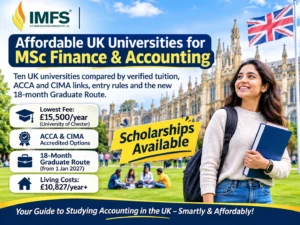
Ulster’s standard international master’s fee is £18,310 for 2026/27. A few named courses cost more, at £20,490. Ulster also has professionally accredited courses, such as an ACCA-accredited MSc in International Accounting with Analytics. Finance students should read our guide to affordable UK universities for MSc Finance and Accounting.
5. University of Sunderland
Sunderland lists £19,000 for 2026/27 (£19,500 for 2027/28) for its Applied master’s courses in computing, cybersecurity, data science and project management, and for its MBA (Professional Practice). Its full MBA costs £20,000. Some courses cost much less, as the next sections explain.
What It Really Costs: Tuition Plus Living Costs
Your visa application must show that you can pay your first-year tuition and your living costs. From 30 November 2026, the living-cost figure is £1,203 a month outside London for up to 9 months, or £10,827 (Statement of Changes, 3 September 2026). You also pay a £558 visa fee and the Immigration Health Surcharge of £776 per year of your visa (GOV.UK). A one-year master’s visa usually lasts longer than a year, so budget for 1.5 years of surcharge, or £1,164.
| University | Tuition | Living-cost proof | Visa fee + health surcharge | Minimum first-year total | Approx. in INR |
|---|---|---|---|---|---|
| University of Chester | £15,500 | £10,827 | £1,722 | £28,049 | ₹35.1 lakh |
| Teesside University | £17,000 | £10,827 | £1,722 | £29,549 | ₹36.9 lakh |
| University of Staffordshire | £17,500 | £10,827 | £1,722 | £30,049 | ₹37.6 lakh |
| Ulster University | £18,310 | £10,827 | £1,722 | £30,859 | ₹38.6 lakh |
| University of Sunderland | £19,000 | £10,827 | £1,722 | £31,549 | ₹39.4 lakh |
This is an illustrative model, not a financial guarantee. Individual outcomes vary. It uses the UKVI minimum living-cost figure, not your actual spending, and excludes flights, deposits and scholarships. Rupee figures use £1 = ₹125 (indicative mid-market rate, 12 November 2026). Rates change daily — consult IMFS for a current estimate.
Rent is the biggest part of living costs, and it varies by city. Our guide to the best cities in the UK for Indian students helps you compare. To plan funding, compare education loans for study abroad and check your monthly repayment with the education loan EMI calculator.
Can I Study in the UK on a Low Budget?
Yes, if you budget for the full cost and not only the tuition fee. These steps make the biggest difference:
- Study outside London. The visa living-cost figure is £1,203 a month outside London, against £1,570 in London.
- Apply early for scholarships. Many universities on this list advertise international scholarships; see our guide to scholarships for studying abroad.
- Work part-time, within the rules. Master’s students can usually work up to 20 hours a week in term time and full-time in vacations (UKCISA). Our part-time earnings calculator and guide to part-time jobs in the UK show what is realistic.
- Choose a one-year master’s. A shorter course means one year of fees and living costs.
What Is the Cheapest Course to Study in the UK?
At many budget universities, the subject does not change the fee much. Chester, Teesside and Staffordshire each charge one standard fee for most taught master’s courses. So the university you pick matters more than the subject.
There are exceptions. The University of Sunderland lists its MA Social Work at £10,000 for 2026/27, while its MBA costs £20,000. Teesside’s two-year Advanced Practice route costs £10,000 a year. Always check the exact course page before you shortlist.
If you have a specific field in mind, these guides go deeper: best STEM universities in the UK, affordable MSc Finance and Accounting in the UK and best universities in the UK for international students.
Entry Requirements and IELTS
Most taught master’s courses at these universities ask for a UK 2:2 honours degree or its equivalent, but the exact rule and IELTS score differ by course. Check each course page. If your score is lower than you hoped, see UK universities accepting low IELTS scores and try our IELTS score predictor.
Work After Your Degree: The 18-Month Graduate Route
If you apply for the Graduate visa on or after 1 January 2027, a bachelor’s or master’s degree gives you 18 months to stay and work in the UK. Applications made on or before 31 December 2026 still get 2 years, and PhD graduates keep 3 years (GOV.UK). Plan your job search from your first term. Read UK Graduate Route (18 months) vs Ireland Stamp 1G and high-paying career choices in the UK.
Compare with Ireland
Ireland is the closest alternative for a one-year, English-taught master’s. If you are comparing the two, look at our list of budget-friendly universities in Ireland and our Study in Ireland guide. Compare total cost and post-study work, not only tuition.
Final Tips for Budget-Conscious Students
- Check tuition fees and scholarships on the university’s official website for your intake year.
- Budget for the full visa living-cost figure, not just rent.
- Make a monthly budget before you fly, and track it in your first term.
- Use part-time work for living costs, not for tuition.
- Learn from others: read the top mistakes Indian students make in the UK.
- Get expert counselling before you pay any deposit.
Let IMFS Help You Study in the UK on a Budget
Choosing a university, course and funding plan together is where most students lose money. IMFS counsellors help you shortlist UK universities that fit your marks and budget, plan your application and visa documents, and compare the UK with Ireland where it makes sense.
More help: Master’s abroad counselling · all free study abroad tools
Frequently Asked Questions
Which is the cheapest university in the UK for international students?
How much does a one-year master’s in the UK cost in rupees?
Can I study in the UK on a low budget?
What is the cheapest course to study in the UK?
How long can I work in the UK after my master’s?
How much money do I need to show for a UK student visa?
Can I work part-time while studying in the UK?
Are cheaper UK universities recognised in India?
Is the UK cheaper than Ireland for a master’s?
Related Guides
Last reviewed: 13 November 2026. Sources: official university fee pages (Chester, Teesside, Staffordshire, Ulster, Sunderland); GOV.UK Student visa, Graduate visa and health surcharge pages; Statement of Changes to the Immigration Rules (3 September 2026); UKCISA. Fees, visa rules and exchange rates change; always confirm on the official university and GOV.UK pages before you apply. This article is for informational purposes only and is not immigration or financial advice.
Talk to an IMFS UK Counsellor — Free
Personalised guidance on studying in the UK on a budget. No fees. No pressure.
Prefer to meet in person? Walk in at any of our 10 IMFS branches: Matunga, Thane, Borivali, Vashi, Pune (Shivaji Nagar), Kukatpally, LB Nagar, Madhapur, Nellore, Warangal.